Home · Recipes · Ukadiche Modak
Ukadiche Modak
Prep 30 min · Steam 15 min · Makes 10–12
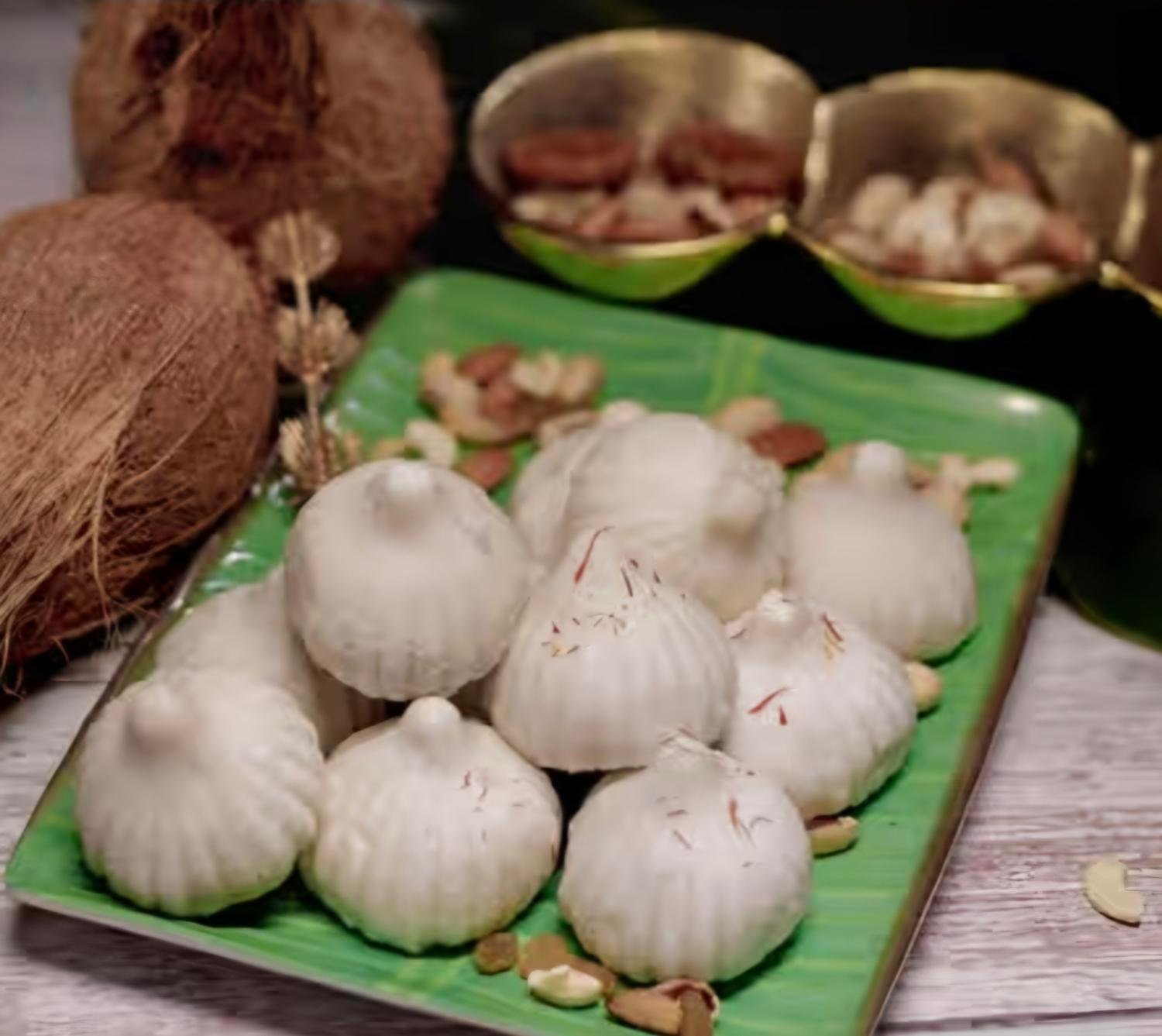
There are a few things I cook only when the house already smells like a festival. Modak is one of them.
Every Ganesh Chaturthi, before anyone sits down to eat, a small plate goes to Ganpati first — a few steamed modaks, still warm, the rice-flour skin a little shiny from ghee. I used to watch my mother pinch those tiny pleats with two fingers, talking to no one in particular, as if the filling would wait patiently if she just kept going. Some came out neat. Some leaned to one side. All of them tasted like home.
Ukadiche means steamed. No frying, no sugar syrup. Just a soft rice-flour cover and a filling of coconut and jaggery that turns sticky and fragrant the moment it hits the pan. If you’ve never made them, they look fussy. They’re not. The dough needs to be warm when you shape it, the filling should be almost dry, and you don’t chase perfect pleats on the first try. You chase that first bite — slightly chewy outside, molten and sweet inside, cardamom in the steam.
Thoughtsout
Serve them hot, with a drop of ghee on top. Cold modak is still good. Hot modak is why you made them.
For the filling
- 1 cup fresh grated coconut (not desiccated)
- ¾ cup grated jaggery
- 1 tablespoon ghee
- ½ teaspoon cardamom powder
- A small pinch of nutmeg (optional, but I add it)
- 1 teaspoon white poppy seeds (khus khus), optional
- 1 tablespoon chopped cashews, optional
For the cover (ukad dough)
- 1 cup fine rice flour
- 1 cup water
- 1 teaspoon ghee
- A pinch of salt
- A little extra ghee or oil, for greasing your palms
The filling first
Put a pan on medium heat and add the ghee. When it melts, tip in the coconut and stir for a minute — you only want it to wake up, not brown. Add the jaggery. It will look messy and wet. Keep stirring. In four or five minutes the jaggery melts, the mix comes together, and it starts leaving the sides of the pan. That’s your cue. Don’t cook it till it’s hard; it should still be soft when you press it between two fingers.
Take it off the heat. Stir in cardamom, nutmeg, poppy seeds, cashews. Spread it on a plate so it cools faster. If you try to fill modaks while this is hot, the dough will tear. Let it sit.
Then the dough
In a kadhai or saucepan, bring the water, ghee and salt to a boil. Lower the heat. Add the rice flour all at once and mix fast with a wooden spoon. It will look lumpy and you will think you’ve ruined it. You haven’t. Cover the pan and let it sit on a low flame for two minutes, then switch off the heat and leave the lid on for another two. The steam finishes the cooking.
Tip the dough onto a plate. When it’s just cool enough to touch — warm, not cold — wet your hands and knead it into a smooth ball. If it cracks, sprinkle a teaspoon of warm water. If it sticks, a drop of ghee. Cover it with a damp cloth. This dough dries out if you look away, so work with one small piece at a time and keep the rest covered.
Shape them
- Grease your palms. Take a lemon-sized ball of dough and flatten it into a small bowl, thinner at the edges, a little thicker at the base. About 3 inches across is plenty.
- Put a teaspoon of filling in the centre. Don’t be generous here — overfilled modaks split in the steamer.
- Bring the edges up and pinch small pleats all the way around, then gather them at the top and twist into a peak. If pleats feel like too much on day one, just gather the edges and seal. It will still taste like a modak.
- Keep the shaped ones under a damp cloth while you finish the rest.
Steam
Line a steamer basket with a wet muslin or banana leaf, or grease it lightly. Place the modaks with a little space between them. Steam on medium heat for 10 to 12 minutes. They’re done when the cover looks a bit translucent and doesn’t taste raw. Take them out, brush with a little ghee, and serve while they’re still breathing steam.
If something goes wrong
- Dough cracking while you shape — it’s too dry or too cold. Knead in a little warm water and work faster.
- Modaks opening in the steamer — filling was wet or you overfilled. Cook the filling a minute longer next time.
- Cover turning hard — you steamed too long, or the dough sat uncovered. Ten minutes is usually enough.
I still don’t make a dozen that look the same. One always leans. One always bursts a little at the seam and leaks jaggery. That’s the one I eat first, standing at the stove, before the plate goes to the table.